
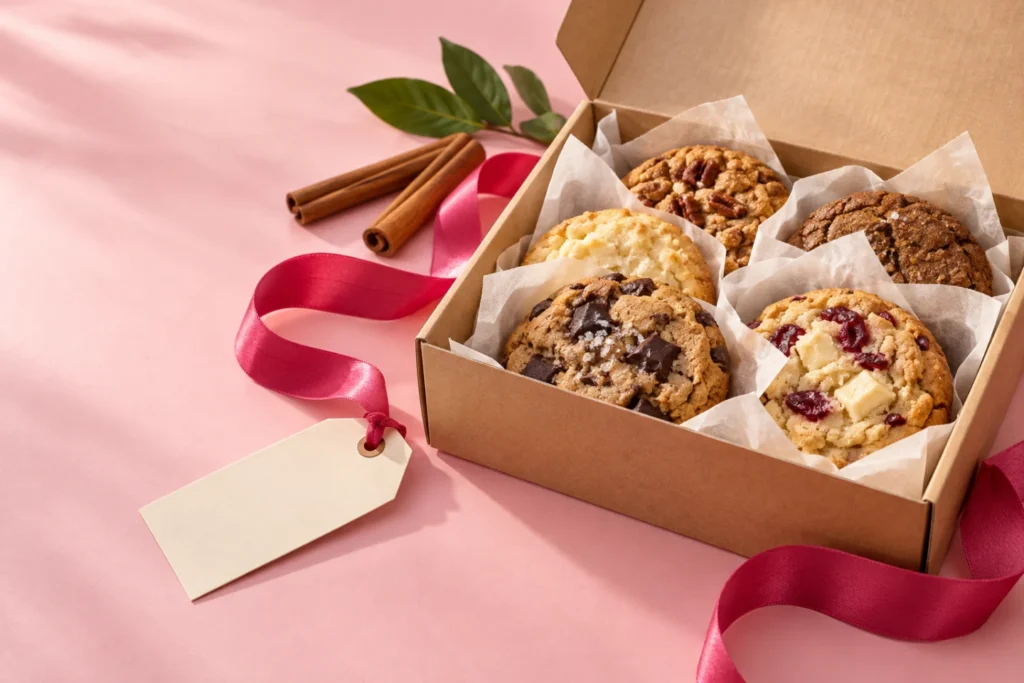
A dessert gift feels thoughtful when the food, package, and message suit the recipient. More elaborate is not automatically more personal. A manageable selection, accurate information, and a package that protects the contents often create a better experience than an overfilled box with no handling guidance.
Start with the recipient and the journey
Consider the occasion, the recipient’s preferences, and how the gift will reach them. A doorstep handoff and a long shipment have different demands. Choose a format that can tolerate its actual journey rather than hoping a delicate dessert will survive it.
Ask about dietary needs directly when appropriate. Do not assume that avoiding a named ingredient makes a kitchen process suitable for a serious allergy. For medically important restrictions, an uncertain homemade gift may not be the right choice.
Create a small, coherent selection
A few complementary items can feel generous without becoming confusing. Think about texture and flavor together: separate crisp and soft items where needed and avoid strongly flavored components affecting delicate ones. Keep portions practical for the recipient’s household.
Choose an approved recipe and allow enough time for the required cooling and setting. A gift deadline is not a reason to omit a critical method step. If you are experimenting with a new formula, validate it before relying on it for an important occasion.
Choose packaging for food first
Use materials suitable for food contact and for the storage conditions. Decorative paper, paint, ribbon, or a repurposed container should not touch food unless it is intended for that purpose. Protect fragile edges with a layout that limits movement.
Add the decorative layer after the functional layer works. A reusable presentation idea can be simple: a restrained color, an unambiguous label, and a personal note. Do not imitate another business’s packaging so closely that the gift could be mistaken for that business’s product.
Include information that helps the recipient
Provide the item name, relevant ingredient and allergen information, date, and appropriate handling directions. A statement that something is homemade does not replace the information a recipient needs to decide whether it suits them.
Avoid making an unvalidated shelf-life promise. A perishable filling or topping may change storage requirements, and a long journey may make a particular gift impractical. The personal note can be warm while the food information remains precise and useful.
Put it into practice
- Match the dessert to the recipient and transport conditions.
- Use a small selection with compatible textures and flavors.
- Choose food-safe packaging before adding decoration.
- Include accurate ingredients and handling guidance without unsupported shelf-life claims.
Thoughtful gifting is a form of good communication. When the recipient knows what the dessert is, how it was intended to be handled, and why you chose it, even a simple package can feel special.
References & further reading
References inform factual checks and further reading; article wording and development commentary are original. Recipe drafts are not kitchen-tested.