
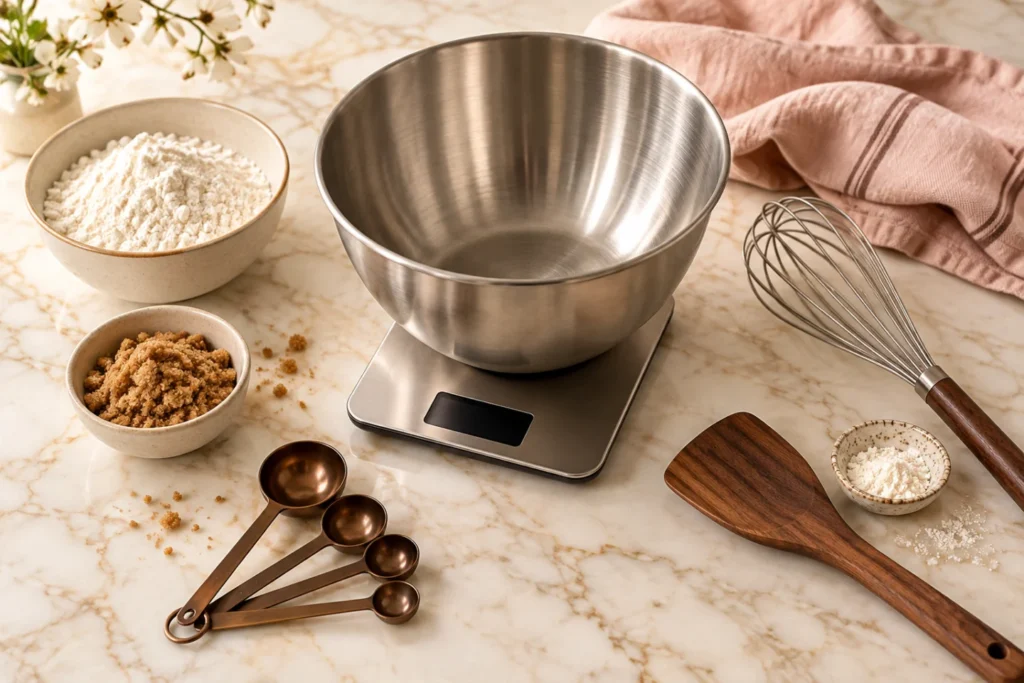
Flour provides structure, but the amount in a measuring cup depends on how that cup was filled. A compacted cup can quietly change the balance of an otherwise carefully followed recipe. Consistent flour measurement is one of the simplest ways to make your baking notes more useful.
Separate mass from volume
Grams measure mass; cups measure volume. Two cups that look equally full can hold different masses if the flour has been shaken, packed, or scooped differently. A digital scale removes much of that particular uncertainty.
Use the gram quantity supplied by the recipe’s author when one is available. King Arthur’s ingredient chart lists its all-purpose flour at 120 grams per cup, but that is not permission to replace every recipe author’s own stated conversion. Ingredients and measurement conventions differ, and the original formula remains your starting point.
Use a repeatable cup method when needed
Without a scale, follow the author’s measuring method. A common approach is to loosen the flour, spoon it into a dry measuring cup, and sweep the top level without compressing it. Plunging the cup into a dense bag and pressing it against the side introduces a different procedure.
Do not tap the cup on the counter to fit in more. Keep wet measuring equipment away from the flour, and check whether an instruction means flour measured before or after sifting. Those words can describe a different sequence, not merely a stylistic preference.
Recognize the symptoms without oversimplifying
Excess flour can contribute to a stiff dough or a dry, crumbly result, but it is not the only possible cause. Overbaking, ingredient substitutions, and storage can create similar symptoms. A dough that appears unusually firm is a reason to review your notes, not automatically pour in extra liquid.
The opposite problem can appear when flour is undermeasured: a mixture may lack the intended balance and spread more than expected. Compare the whole procedure before deciding that one ingredient must be solely responsible.
Build a measurement record
Record the flour brand and type, its measured mass, and any substitution. Include the recipe’s original measurement rather than rewriting it from memory. For a scale, set out the bowl first, tare the display, and add flour gradually as you approach the target.
If you overshoot, use a clean spoon to remove some before mixing. Once flour has joined a wet mixture, you cannot reliably take out the excess. Preparing ingredients in separate bowls costs a little space but can prevent an avoidable adjustment later.
Put it into practice
- Use the recipe’s own weights where provided.
- If measuring by cup, follow one consistent author-recommended method.
- Check flour type and sifting order, not only quantity.
- Record the measurement before deciding to alter moisture.
The goal is repeatability, not proving that one kitchen habit is universally correct. When you know how much flour you added, you have a stronger starting point for every other baking decision.
References & further reading
References inform factual checks and further reading; article wording and development commentary are original. Recipe drafts are not kitchen-tested.