
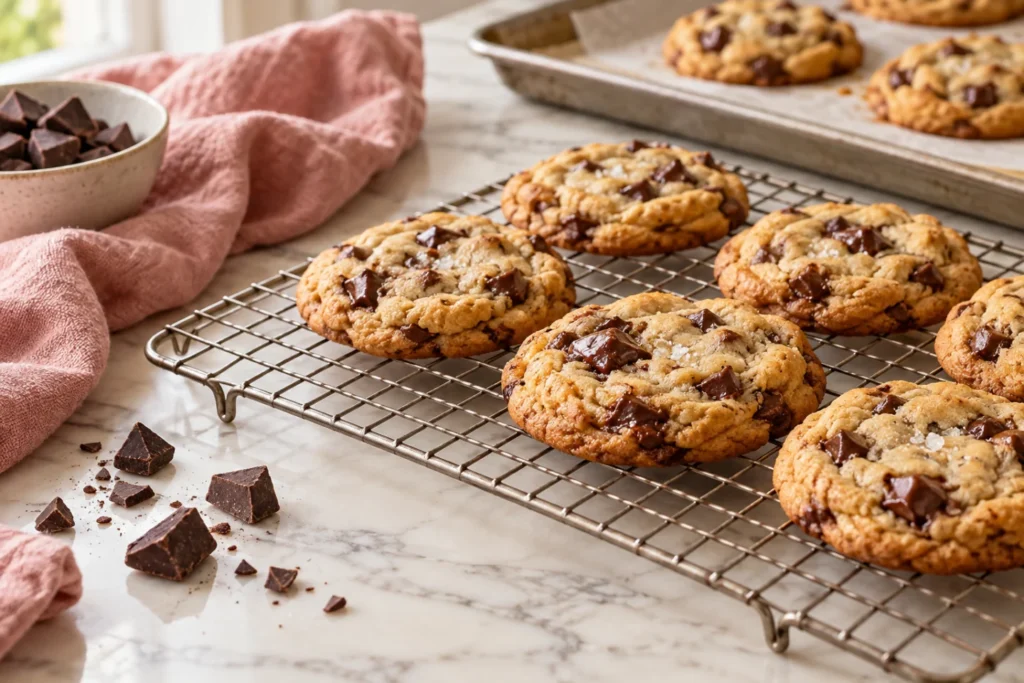
A tray of cookies that merges into one sheet is frustrating, but the pattern can tell you where to investigate. Spread is an outcome of the whole dough-and-oven system. Begin by checking what changed, then run a small comparison instead of rebuilding the entire recipe after one batch.
Check dough temperature first
Warm dough and very soft butter can behave differently from the recipe’s intended starting point. This is especially worth checking after a long mixing session or when your kitchen is hot. If the recipe calls for chilling, treat that as a method step rather than optional downtime.
Chilling is not a universal cure. A dough designed to spread may still spread after refrigeration, and a dough with a measurement error may need a different explanation. Note the original state of the butter and dough before deciding which factor to investigate.
Review the flour and fat measurements
A small flour difference can be important in a modest batch. Confirm the stated weight or measuring method, then review whether you changed butter, oil, shortening, sugar, or add-ins. Different fats are not automatically equivalent by volume.
Do not keep adding flour until a dough feels familiar unless you are deliberately developing a new formula. That can produce a thicker cookie with a dry texture while hiding the original error. Return to a measured control batch when the record is unclear.
Look at the tray and oven
Dough placed on a hot sheet may begin changing before the tray reaches its intended baking position. Let sheets cool between rounds and use the lining the recipe recommends. A greasy surface, a different pan, or an oven running away from its setting can complicate the comparison.
Give portions enough room, and keep their sizes consistent. If one side spreads more, note the sheet orientation and oven position. An uneven pattern may suggest equipment or placement rather than a problem with every ingredient.
Run a two-cookie test
Bake two representative portions before committing the remaining dough. If the original batch has a chilling instruction, follow it first. Compare the cooled test cookies with the intended result, recording the size and bake time.
For your next experiment, alter one factor: for example, a properly cooled sheet instead of the warm one you used previously. Keep a written control so you can tell which adjustment mattered. Avoid judging texture while the cookie is still too hot to handle safely.
Put it into practice
- Confirm the butter and dough were in the intended condition.
- Review flour measurement and fat substitutions.
- Use a cool tray and consistent portion size.
- Bake a small test and change one variable, not four.
The best fix is the one your notes support. A measured, repeatable comparison teaches you far more than an emergency handful of flour, and it makes the next batch easier to understand.
References & further reading
References inform factual checks and further reading; article wording and development commentary are original. Recipe drafts are not kitchen-tested.