
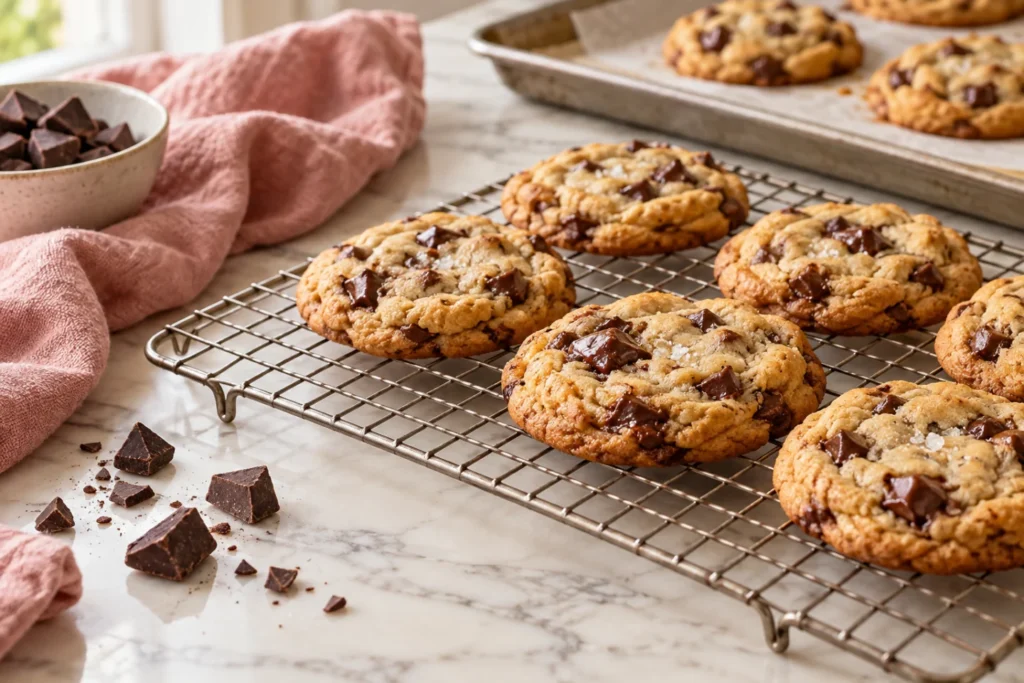
Freshness is a combination of texture, aroma, handling, and appropriate storage. There is no single countertop rule for every cookie because fillings and finishes change the situation. Begin by identifying what you baked, then choose a storage plan that protects both quality and safety.
Sort by ingredients and intended texture
Plain crisp cookies, soft cookies, and cream-filled cookies do not belong to one storage category. Check the recipe and any filling instructions before deciding where the batch should go. A cookie topped with a perishable ingredient needs attention beyond whether the baked base feels dry.
Write the bake date and the product type on the container. That small label makes it easier to manage several batches and prevents a gift recipient from having to guess what is inside or how it was handled.
Cool before ordinary packaging
Follow the recipe’s cooling instructions. Trapping steam in a closed box can soften a crisp surface and affect how a cookie feels. Arrange fully cooled plain cookies in a suitable container without crushing delicate edges.
Use separators when needed, but do not assume a decorative box is airtight or food-safe. Check the packaging material and keep strongly flavored items apart. The same principle applies to shipping: a beautiful package still needs to suit the cookie, the journey, and the temperature conditions.
Plan small batches and freezing thoughtfully
For a future occasion, freezing a suitable plain cookie may protect quality better than leaving it on the counter for a long period. Use packaging intended for freezer storage, label it, and follow a reliable recipe’s freezing and thawing directions. Frostings and fillings may not tolerate the same treatment.
If you need only a few portions now, consider a recipe designed for a smaller yield. Dividing a formula casually can be awkward when eggs or tiny leavener quantities are involved. A smaller tested formula reduces the temptation to store a large batch longer than intended.
Handle perishable components conservatively
Keep perishable fillings or toppings refrigerated as directed. FoodSafety.gov advises prompt chilling of perishable food, including a two-hour room-temperature limit, shortened to one hour above 90°F. A picnic table, car, or outdoor stall can become a different environment from a cool kitchen.
Do not use smell, renewed softness, or a clean-looking surface as proof of safe storage. When a storage history is unknown, make a cautious decision. For gifts, include clear handling instructions rather than a universal shelf-life promise that has not been validated for that product.
Put it into practice
- Label each batch with its date and filling or topping.
- Package only after the required cooling step.
- Separate crisp, soft, and strongly flavored styles.
- Use recipe-specific storage guidance; do not promise a universal shelf life.
The most dependable freshness strategy is planning: bake an appropriate amount, package for the actual product, and explain its handling needs. A few careful decisions can preserve quality without making unsafe promises.
References & further reading
References inform factual checks and further reading; article wording and development commentary are original. Recipe drafts are not kitchen-tested.