
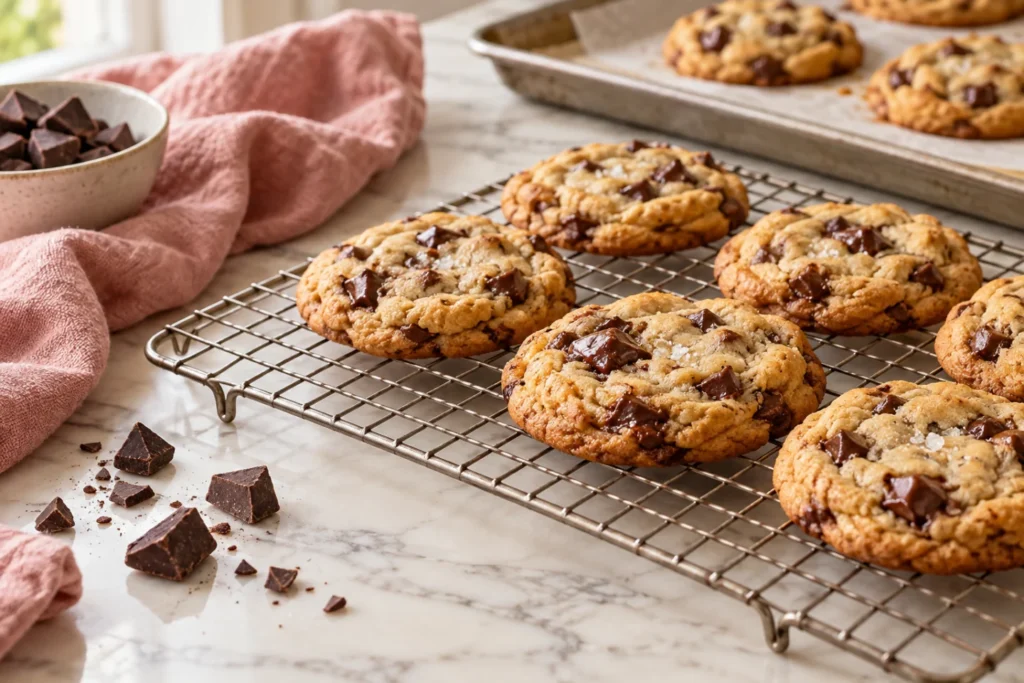
A cookie can look promising straight from the oven and feel quite different after cooling. Before changing the recipe, separate three questions: Was the intended texture understood, was the bake accurate, and did storage change it? Each points to a different kind of correction.
Judge the intended style after cooling
A crisp cookie is not a failed chewy cookie if crispness was the recipe’s goal. Read the description and method together. Thin portions, longer baking, and different ingredient balances can belong to a deliberate style rather than a mistake.
Let cookies cool as directed before you compare texture. A warm center may feel softer than the finished cookie will be. Record the cooled result instead of repeatedly extending or shortening future bakes based on a texture observed only while the tray was hot.
Check for measurement drift
Review flour quantity and whether it was weighed, spooned, or packed. Also check whether you reduced sugar, used a different fat, or omitted a small ingredient. Those are meaningful formula changes, even when they seem like simple preferences.
A dough that felt unusually stiff before baking gives you a different clue from a dough that felt normal but dried out afterward. Keep these observations separate. Adding milk or another egg without knowing the cause can create a second, unrelated texture problem.
Investigate the bake and the portion size
Smaller portions generally require a different timing decision from larger ones, and your oven may not behave exactly like the recipe developer’s equipment. Begin checking at the stated early checkpoint and use the recipe’s cues rather than waiting for every surface to become dark.
Compare a control tray using the original pan, rack, and portion weight. If you used a dark pan or convection setting that the method did not anticipate, record that too. A single successful adjustment is more useful when you can repeat the conditions that produced it.
Separate softness from safe storage
Once fully cooled, package cookies in a suitable container. Keeping crisp and soft styles together can change both textures. A frosting, cream filling, or fresh-fruit addition can introduce storage needs that a plain cookie does not have.
Do not use tricks for restoring softness as evidence that food is safe. Texture changes and food safety are different issues. For questionable storage, unusual spoilage, or a perishable component, follow an appropriate food-safety reference rather than trying to rescue the appearance.
Put it into practice
- Write down the texture the recipe actually promises.
- Compare cooled cookies, not only warm centers.
- Check flour, portion weight, oven mode, and bake time.
- Store different textures separately and follow filling-specific safety guidance.
An accurate diagnosis protects flavor as well as texture. Start with the original method, observe when the unwanted dryness appears, and make the smallest useful change supported by that observation.
References & further reading
References inform factual checks and further reading; article wording and development commentary are original. Recipe drafts are not kitchen-tested.